Skip to content
  • Free delivery* and returns
  • Packed with care, delivered within 1-3 working days
  • 30 days consideration period
  1. Home
  2. Blog

Our blog

On this blog page you can read inspiring and recognizable stories of moms and dads (to be) and experts about their special profession. In addition, you can read the fun blogs about our newest items, checklist and tips.

Van spelen naar slapen: Creëer een fijn rustmoment overdag | Tips van Slaapkops

Van spelen naar slapen: Creëer een fijn rustmoment overdag | Tips van Slaapkops

Je kindje is lekker aan het spelen en jij kijkt op de klok: tijd voor het middagdutje. Je weet dat het slapen moeizaam verloopt als je je kindje abrupt uit zijn spel haalt. Maar je wilt je kindje ook niet te laat naar bed brengen, want dan valt hij juist ook weer lastiger in slaap. Hoe pak je dit aan, en hoe zorg je dat het overgangsmoment van spelen naar slapen soepel verloopt, zodat je kindje heerlijk kan spelen EN slapen?Waar wij als volwassenen vrij makkelijk schakelen van actief naar rustig, moet een baby of peuter dat nog leren. Jonge kinderen zijn nog nauwelijks in staat om hun eigen opwinding zelf af te remmen. Zonder jouw hulp blijft het lichaam vaak in een verhoogde staat van alertheid, met meer cortisol, een hogere hartslag en een drukker hoofd. Geen ideale basis om in slaap te vallen. Precies daarom is een overgangsmoment tussen spelen en slapen zo belangrijk. Zo help je je kindje om makkelijker en rustiger over te schakelen.Waarom een overgangsmoment zo belangrijk isEen rustige en voorspelbare overgang voor het slapen draagt bij aan sneller inslapen en minder nachtelijk wakker worden. Het lichaam heeft even de tijd nodig om van een actieve staat naar een ontspannen staat te gaan. Hoe voorspelbaarder dat verloopt, hoe makkelijker het lichaam leert wat er komen gaat.Je herkent dit misschien ook van jezelf. Als je nog druk in de weer bent geweest en daarna direct naar bed gaat, duurt het langer voor je in slaap valt. Geef je jezelf eerst even de tijd om tot rust te komen, bijvoorbeeld met een warme douche of een boek, dan ben je al in een ontspannen staat en val je rustiger in slaap en slaap je makkelijker door. Jonge kinderen hebben nog meer tijd nodig om te schakelen dan wij, dus voor hen is dit rustmoment nog belangrijker.Tips voor een rustmoment overdagMaar hoe zorg je dat je kindje dit rustmoment goed kan pakken?• Bouw altijd een paar rustige minuten in voor het slapen Stop niet abrupt met spelen om je kindje meteen in bed te leggen. Kies voor een rustmoment van vijf tot tien minuten voor het slapen. Dit rustmoment staat nog los van het bedtijdritueel zelf. Denk aan samen rustig zingen of knuffelen. Dit geeft het zenuwstelsel de tijd om af te remmen. Belangrijk is dat dit rustmoment niet lang hoeft te duren om effect te hebben. Een paar minuten maken al een wereld van verschil.• Dim het licht en beperk de prikkels Fel licht en veel geluid houden het lichaam actief. Vooral blauw licht, zoals van fel wit ledlicht of een scherm, remt de aanmaak van het slaaphormoon melatonine. Doe daarom gordijnen dicht en zet de tv uit. Ook al kijkt je kindje nog niet bewust naar de tv, de prikkels komen wel binnen en zijn vlak voor het slapen lastig te verwerken.• Herhaal steeds dezelfde handelingen voor het slapen Een voorspelbaar patroon, ook overdag, helpt een kindje te begrijpen wat er gaat gebeuren. Overdag mag het bedtijdritueel een ingekorte versie zijn van 's avonds. Denk aan slaapzakje aan, gordijnen dicht en een liedje zingen, waarna je kindje in bed gaat. 's Avonds kan hier bijvoorbeeld nog een badje, een babymassage en het lezen van een boekje aan worden toegevoegd. Voorspelbaarheid zorgt voor veiligheid, en veiligheid geeft rust, waardoor je kindje makkelijker in slaap valt. Kinderen leren zo'n patroon heel snel herkennen, dus voor je het weet heb je samen een fijn nieuw ritueel te pakken.Een fijn slaapzakje kan een herkenbaar onderdeel worden van dit vaste ritueel. In onze categorie slapen vind je alles voor een comfortabel en geborgen slaapmoment.• Houd de vermoeidheidssignalen in de gaten Veel kindjes laten vermoeidheidssignalen zien. Naast dat je natuurlijk een vast ritme en wakkere tijden kunt aanhouden, blijft het allerbelangrijkste om goed naar je kindje te kijken. Laat je kindje eerder dan verwacht vermoeidheidssignalen zien? Breng hem dan wat eerder naar bed. Een kind dat oververmoeid of overprikkeld raakt, heeft daarna meer moeite om tot rust te komen en in slaap te vallen. Wrijven in de oogjes, minder interesse tonen in speelgoed of onrustig worden zijn signalen om op tijd te beginnen met het afbouwen van het spel.Bonustip: doet jouw kindje geen middagdutje meer? Zorg dan toch voor een rustmoment overdag. Leg je kindje bijvoorbeeld met een luisterboekje in bed, of laat hem heerlijk op de bank liggen terwijl er op de achtergrond een rustige meditatie speelt. Zo komt je kindje toch even een beetje tot rust.De weg naar bedtijd rustig afbouwenEen paar minuten rust voor het bedtijdritueel, minder prikkels en een vast patroon zijn vaak al genoeg om van spelen naar slapen een zachte overgang te maken in plaats van een strijd. Volg je deze stappen, dan begin je aan bedtijd met een voorsprong.   Tamara & Glynis van Slaapkops
Learning to drink from a cup: helping your baby drink independently

Learning to drink from a cup: helping your baby drink independently

That first sip from a cup might seem like a small moment, but for your baby, it is a whole new discovery. Holding a cup, placing their lips around the rim, taking a sip and learning how much to drink all require new skills. And honestly? The first attempts probably won't go exactly as planned. Water gets spilled, the cup gets turned upside down, your baby mostly plays with it and sometimes more water ends up on the table than in their mouth. That's all part of it. Learning to drink is a process. Just like learning to walk or eat independently, it takes time and plenty of practice. When can babies start drinking from a cup? From around 6 months, when your baby starts eating solid foods, you can offer water alongside their usual milk feeds. This can also be a good time to introduce drinking from a cup. In the beginning, there is no need to drink large amounts. A few small sips with a meal are enough to practise. Every baby develops at their own pace. Some babies quickly figure out how to hold a cup, while others need more time to get used to the movement and sensation of drinking from a cup. There is no exact age when your baby has to be able to drink from a cup. Think of it as a new skill to discover together. Why choose an open cup? An open cup helps your baby learn a different way of drinking. They practise bringing the cup to their mouth, placing their lips around the rim, controlling the amount of liquid and swallowing. Drinking from an open cup can also support oral motor skills and hand-eye coordination. Health professionals generally recommend introducing an open cup rather than relying on a spout cup as a necessary step. A spout cup or straw cup can of course be practical in some situations, especially when you're out and about. But a spout cup isn't a necessary step before learning to drink from an open cup. You can introduce an open cup directly. How to teach your baby to drink from a cup 1. Choose a calm moment Try during a mealtime when your baby is relaxed. A few sips are enough. The goal isn't to finish a whole cup straight away. 2. Start with a small amount of water Put just a little water in the cup. This makes practising easier and means there is less water to spill. From around 6 months, you can offer water alongside breast milk or formula. In the beginning, a few sips are enough. 3. Help your baby with the movement You can gently hold the cup together and bring it towards your baby's mouth. Let them explore as much as possible, but offer help when needed. In the beginning, your baby may cough or splutter a little. This can happen while they are getting used to a new way of drinking. Stay calm and give them time to practise. 4. Expect a little mess Water on the table? A wet sleeve? A cup tipped over? It happens. By practising, your baby gradually learns how much pressure to use, how to bring the cup to their mouth and how to take a sip. Common challenges when learning to drink “My baby just plays with the cup” Very normal. For young children, a cup isn't just something to drink from. It's also something new to explore. Holding, turning and touching it are all part of learning. “My baby only drinks a few drops” That's completely fine when you're just starting. In the beginning, it's mainly about getting used to the cup and practising the movement. Every baby is different. “My baby makes a huge mess” It can be frustrating, especially when you've just cleaned everything up. But spilling is part of learning to drink independently. Your baby is discovering how much force to use and how the cup works. Do's & don'ts when learning to drink from a cup Do's Start calmly and without pressure Let your baby practise as much as possible Offer small amounts of water Choose a cup that is easy for little hands to hold Practise regularly during mealtimes Keep drinking relaxed and enjoyable Don'ts Don't expect your baby to drink neatly straight away Don't force your baby to take a sip Don't worry too much about spills Don't keep postponing an open cup because you're worried about the mess Don't feel that you need to use a spout cup as a necessary step Which cup is best for a baby? A good learning cup doesn't need to be complicated. For little ones, it helps if the cup is lightweight and easy to hold. An open cup in a size that suits small hands can make practising independent drinking a little easier. Our silicone cups are designed for those first drinking moments: easy for little hands to hold and made for everyday use. From that first careful sip to becoming more independent, learning to drink happens one little step at a time. Because those first attempts don't have to be perfect. They just have to happen together. A wet table, a few drops on the floor and a big smile? That's what being at home with little ones is all about. Frequently asked questions about drinking from a cup When can a baby start drinking from a cup? From around 6 months, you can offer your baby water alongside their usual milk feeds and introduce them to drinking from a cup. Every baby develops differently, so look at your baby's cues and readiness. Is an open cup better than a spout cup? An open cup is a good way to help your baby practise a natural drinking pattern. A spout cup isn't a necessary step before learning to drink from an open cup. Can my baby learn to drink from a straw cup? Yes. A straw cup can be a practical option, especially when you're out and about. It's still useful to give your baby opportunities to practise with an open cup as well. How can I stop everything getting wet? Honestly, you probably can't completely. Start with a small amount of water and practise during a mealtime. Putting a cloth underneath the chair can help too. A little mess is simply part of learning to drink. And luckily, wet tables eventually dry.
Banana Pancakes for Babies | An Easy BLW Recipe for First Finger Foods

Banana Pancakes for Babies | An Easy BLW Recipe for First Finger Foods

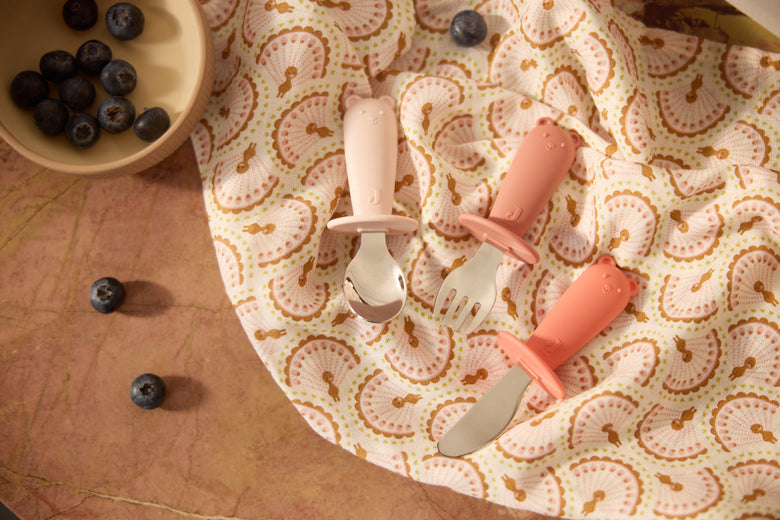
These soft banana pancakes for babies are easy to make with just a few simple ingredients. Naturally sweet and with no added sugar, they make a great first finger food for little ones learning to eat independently. Learning to eat is about more than eating The first bites are about so much more than the food itself. For your little one, every meal is a new experience: discovering flavours, feeling different textures and learning how to handle food independently. Touching, squeezing and exploring food with little hands are all part of the learning process. It helps babies develop fine motor skills and build confidence around eating. So if your little one squishes a pancake, drops a piece on the floor or spends more time exploring than eating, that's completely okay. It’s all part of discovering food in their own way. Ingredients (Makes about 10 mini pancakes) 1 ripe banana 1 egg 3–4 tablespoons rolled oats or oat flour A pinch of cinnamon (optional) Method Mash the banana until smooth. Add the egg and whisk together. Stir in the oats or oat flour until combined. If the batter feels a little thick, you can add 1–2 tablespoons of breast milk, formula or water to loosen it slightly. Every family is different, so simply use whatever works best for you and your little one. Let the batter rest for about 5 minutes so the oats can absorb some of the moisture. Heat a frying pan over low heat with a little butter or oil. Spoon small pancakes into the pan and cook gently until the top begins to set. Carefully flip them over and cook for another minute or two. Allow the pancakes to cool before serving. A little tip These pancakes are wonderfully soft, making them perfect for little eaters. Because of that, they can sometimes be a little tricky to flip. If one breaks apart in the pan, don't worry, that's completely normal. To your baby, it doesn't matter whether it's a perfect little pancake or a few soft pieces on the plate. In fact, those smaller pieces can even be easier for tiny hands to pick up and explore. Learning to eat isn't about making everything perfect,it’s about discovering new flavours, textures and enjoying the journey. Perfect for Baby-Led Weaning (BLW) If you're following Baby-Led Weaning (BLW), these banana pancakes make a wonderful first finger food. Their soft texture makes them easy for little hands to hold while encouraging your baby to practise self-feeding at their own pace. From around 6 months, when your baby is ready to start solids, they can begin exploring soft foods like these pancakes. Every baby develops differently, so always follow your little one's cues and adapt foods to their age and stage. Try Different Flavours Once your little one enjoys the basic recipe, it's easy to mix things up.Try adding: Grated apple for a naturally sweet twist Blueberries for extra colour and flavour Mashed strawberries Finely grated pear A spoonful of plain Greek yoghurt for an even softer texture Introducing different flavours and textures is all part of helping your baby become a confident eater. No Oats at Home? No rolled oats in the cupboard? No problem. Oat flour works just as well and creates an even smoother texture, perfect for babies who are just starting solids. Make Ahead & Freeze These pancakes are perfect for busy family life. Make a larger batch and keep them in the fridge for up to 2 days, or freeze them for up to 3 months. Simply thaw and warm them gently before serving.  Making memories around the table Mealtimes are about so much more than what’s on the plate. They are moments to discover, learn and enjoy being together. A first taste, tiny hands reaching for food and a proud smile after taking that first bite - these are the little moments that make family life so special. Having the right essentials can make these first eating moments a little easier. Our silicone tableware collection is designed for little explorers: easy for small hands to hold and made for everyday family moments. From first bites to learning to drink independently, these are the pieces designed to support your little one through their first eating moments.A little mess is part of the journey. A few crumbs on the table, sticky fingers or a dropped spoon are all signs that your little one is learning and becoming more independent. Because the sweetest memories aren’t always the neatest ones. They begin right at home.
🌞 Baby holiday essentials checklist: what to pack for a stress-free trip with your baby

🌞 Baby holiday essentials checklist: what to pack for a stress-free trip with your baby

Planning a holiday with your baby? Discover the most useful baby holiday essentials for sleep, travel, swimming and relaxed family days away from home.

Motherhood without filters: why mums need support, not perfection

Motherhood without filters: why mums need support, not perfection

Motherhood is often shown as something natural, as if everything just falls into place. But every mother knows reality is very different. It is beautiful, intense, exhausting, loving and sometimes completely overwhelming all at once. That is why what mothers need most is each other. The image of the perfect mother On social media we often see calm mothers, peacefully sleeping babies and perfectly styled homes. But these images never show the full reality. The sleepless nights, the doubts and the moments of feeling completely overwhelmed are rarely visible. This is why many mothers feel alone, even when they are not. Real life is not perfect and that is okay Every mother does things differently. Every baby is different. There is no single right way to do motherhood. There is only what works for your family. Motherhood is not a manual. It is something you learn as you go. Why comparison feels so heavy Comparing yourself to others often feels harmless, but it can be emotionally draining. We tend to think others are doing better, while we only see a small highlight of their lives. What mothers really need Understanding, not judgment. Simple words like “me too” or “you are doing your best” can mean everything. Being kind to yourself There is no perfect way to be a mother. Good enough truly is enough. Together instead of alone Motherhood is not a competition. It is a community. A place where we support each other, share honestly and feel understood. In the end, all mothers want the same thing: to love their child and do their best in their own way.
First Easter with your little one? Tips for a cozy Easter brunch or picnic!

First Easter with your little one? Tips for a cozy Easter brunch or picnic!

Is this the very first Easter with your little one? What a milestone! At Jollein, we love celebrating all 'firsts' with you. Easter is the perfect moment to create new memories, whether you’re sitting down for a big family meal or choosing a cozy picnic in the sunshine. We’re sharing some practical tips to make this first Easter brunch a total success. The Easter Table An Easter table full of treats and a baby or toddler: sounds like a challenge, but it doesn’t have to be! With the right preparation, you can keep it cozy (and the table somewhat clean). Muslin cloths as decoration Our XL muslin cloths are perfect as a cheerful table runner in the middle of the table. You can also loosely tie them as extra-large, soft napkins. It instantly gives that fresh spring look, and you’ll always have a cloth nearby for unexpected spills. Silicone baby tableware Leave the breakable plates in the cupboard. Our silicone tableware is indestructible, dishwasher safe, and features handy suction cups. That way, the Easter egg won’t go flying across the room! Bibs with sleeves An Easter breakfast isn’t complete without a few stains. Our bibs with sleeves protect that adorable Easter outfit, so your little one can explore and taste without a worry. Picnicking with your little one Enjoying the first rays of sunshine! When the sun is out, there’s nothing better than heading outdoors. A picnic is the ideal informal way to celebrate Easter with a baby or toddler. Comfortable on the grass Bring a thick playpen mat or a soft knitted blanket. This creates the perfect base for your baby to lie on or play while you enjoy your sandwich. Handy suitcases Pack one of our cute little suitcases with some snacks, a sippy cup, and a muslin. Your child will love having their very own 'Easter basket' full of surprises. Entertainment Don’t forget to bring some wooden toys. They are durable, can handle the outdoor elements, and will keep your little one happily busy. Whether you choose an extensive brunch at the table or a relaxed picnic on a blanket: make it a magical 'first'. Happy Easter!